Cyphon | Updated 24 October 2026 | 10-minute read
Quick answer: AI glasses look like normal glasses with a camera, speakers and an AI assistant, but most have no screen. AR glasses show a virtual screen or images over the real world. VR headsets cover your eyes and replace the real world completely. Choose AI glasses for daily help, AR for a portable big screen, and VR for full immersion.
All three are types of immersive technology, but they do very different jobs. This guide compares them in plain words, with specs, prices in India and advice for students, businesses and gamers.
The difference at a glance
|
Feature |
AI glasses |
AR glasses |
VR headsets |
|
What you see |
The real world, through normal lenses |
The real world, plus a virtual screen or images |
A virtual world, or a camera view of your room |
|
Screen |
None on most models |
Yes, inside the lenses |
Yes, covering your eyes fully |
|
Main job |
Photos, music, calls and AI answers |
Movies, games and work on a big virtual screen |
Games, training, fitness and 3D experiences |
|
Controls |
Voice, touchpad and buttons |
Buttons, plus the device it's plugged into |
Hand controllers or hand tracking |
|
Picture quality |
No picture on most models |
Sharp 1080p picture for each eye (XREAL One) |
2064 × 2208 pixels for each eye (Quest 3) |
|
Weight |
Under 50 g (Ray-Ban Meta) |
84 g (XREAL One) |
515 g (Meta Quest 3) |
|
Battery |
8 to 9 hours |
Usually none; the phone or laptop powers it |
About 2 to 2.5 hours |
|
What else you need |
A phone with the Meta AI app |
A phone, laptop or console to plug into |
A phone app (Meta Horizon) for setup; no PC needed |
|
Price in India (Oct 2026) |
About ₹39,900 to ₹52,300 |
About ₹30,000 to ₹65,000 |
About ₹43,000 to ₹72,000 |
|
Examples |
Ray-Ban Meta, Oakley Meta |
XREAL One, XREAL One pro |
Meta Quest 3, Meta Quest 3S |
Key terms in plain words
People often mix up these words, so here is what each one means:
|
Term |
What it means |
|
Smart glasses |
Any glasses with electronics inside. AI glasses, AR glasses and audio glasses are all smart glasses. |
|
AI glasses |
Smart glasses built around an AI assistant, with a camera, microphones and speakers. Most have no screen. |
|
AR (augmented reality) |
Digital images added on top of the real world, which you can still see. |
|
VR (virtual reality) |
A fully digital world that blocks out the real one. |
|
MR (mixed reality) |
A headset's cameras show your room, and the headset places digital objects in it. |
|
XR (extended reality) |
The umbrella word for AR, VR and MR. You'll see it in names like Android XR and Galaxy XR. |
|
Immersive technology |
Any tech that blends digital content with what you see or hear. AR, VR and MR are the main types. |
What are AI glasses?
AI glasses are glasses with a small computer, a camera, microphones and speakers hidden in the frame. An AI assistant listens when you speak and answers through tiny speakers near your ears. Most AI glasses have no screen, so your view of the world stays the same.
Ray-Ban Meta and Oakley Meta are the best-known AI glasses in India. Say "Hey Meta" and you can take photos, play music, make calls or ask about what you're looking at. The newest Ray-Ban Meta (Gen 3) went on sale in India on 1 October 2026, starting at ₹44,300.
AI glasses are also growing fast. Counterpoint Research found that global AI glasses shipments rose 263% in the first half of 2026 compared with a year earlier. Models without a display made up 96% of all AI glasses shipped. Meta had 94% of that display-free market, and India made up 3.7% of those shipments.
What are AR glasses?
AR (augmented reality) glasses add digital images to the real world. A popular type is display glasses, such as XREAL. Two tiny screens in the frame send a picture into the lenses. To your eyes, it looks like one large screen floating in front of you, and you can still see the room around it.
Most AR display glasses have no battery or AI of their own. You plug them into a phone, laptop or game console with a USB-C cable, and they show that device's screen. The XREAL One, for example, weighs 84 g and shows a 1080p picture to each eye. It has a 50-degree field of view, which is how much of your vision the picture fills.
Its built-in X1 chip keeps the virtual screen fixed in place when you turn your head. That makes it feel like a real screen in the room.
Newer AR glasses are adding AI as well. XREAL Aura runs Google's Android XR with the Gemini assistant and has a 70-degree field of view. Pre-orders opened in October 2026 at $1,279 in the US, Canada, Japan and South Korea, with more countries planned for 2027.
What are VR headsets?
A VR (virtual reality) headset covers your eyes completely and shows a 3D virtual world. Sensors track your head and hands, so the world moves when you turn or reach out. That makes VR the most immersive of the three.
Popular VR headsets like the Meta Quest 3 and Quest 3S are standalone. They have their own chip and battery, so they need no PC or phone. They also do mixed reality: front cameras show your room in colour, and the headset places virtual objects in it.
VR headsets are heavier and need charging more often. A Quest 3 weighs 515 g and lasts about two hours on a charge. Battery head straps from brands like BOBOVR add extra hours and help balance the weight on your head.
One point matters in India. Meta doesn't officially sell Quest headsets here, so buyers get imported units from Indian sellers. Ask for a GST invoice and check who handles the warranty before you pay.
Types of immersive technology: how much of the real world you see

Figure 1. What you see through AI glasses, AR glasses, a mixed reality headset and a VR headset
The easiest way to tell these devices apart is to ask how much of the real world you still see. AI glasses leave all of it. AR glasses add a screen on top. Mixed reality headsets show your room through cameras and add objects to it. VR replaces it completely.
AI glasses vs AR glasses vs VR headsets: head-to-head comparison
Difference between AI glasses and AR glasses
The big difference is the screen. AI glasses help you through sound and a camera, while AR glasses show you a picture. AI glasses run on their own battery and weigh under 50 g, so you can wear them all day. AR glasses must stay plugged into a device, but they give you a private big screen.
On a train, for example, AI glasses can play a podcast and read out a WhatsApp message. AR glasses can show a movie from your phone on what looks like a large screen.
AR glasses vs VR headsets: the difference between AR and VR
Both show you a screen, but AR glasses keep the real world in view and VR blocks it out. AR glasses suit watching and working. VR suits games, training and 3D experiences where you move around and use your hands.
AI glasses vs VR headsets
These are almost opposites. AI glasses are made for everyday wear in public and add to your real life. A VR headset is made for focused sessions at home, in class or at work, and takes you out of real life for a while.
AI glasses vs smart glasses: are they the same?
Not exactly. AI glasses are one type of smart glasses. "Smart glasses" covers any glasses with electronics, including AR display glasses and audio-only glasses. AI glasses are the ones built around an AI assistant.
Which is better: AR or VR?
Neither is better overall, because they do different jobs. AR is better when you need to see the real world, like watching a film on a flight or working on a virtual monitor. VR is better when you want full immersion, like gaming, fitness or training that copies a real workplace.
Which one should you buy?
|
If you are… |
Best fit |
Why |
|
A student or teacher |
VR headset |
Virtual labs, field trips and 3D models make lessons hands-on |
|
A university or institute |
VR headsets, plus AR glasses for presentations |
VR for immersive lessons; AR glasses for private screens |
|
An IT professional or remote worker |
AR glasses |
A large, private virtual monitor from your laptop |
|
A company or factory |
VR headsets |
Safety drills and job training without real-world risk |
|
A gamer |
VR headset, or AR glasses for handheld and console games |
VR for immersive games; AR for a big screen anywhere |
|
A creator or traveller |
AI glasses |
Hands-free photos, video, calls and music |
|
Someone who wants AI help all day |
AI glasses |
A voice assistant you can wear everywhere |
Prices in India (October 2026)
|
Device |
Type |
Price in India |
Where the price is from |
|
Ray-Ban Meta (Gen 2) |
AI glasses |
From ₹39,900 |
India launch price |
|
Ray-Ban Meta (Gen 3) |
AI glasses |
From ₹44,300 |
Meta's India launch price |
|
Oakley Meta HSTN |
AI glasses |
From ₹41,800 |
India launch price |
|
Oakley Meta Vanguard |
AI glasses |
From ₹52,300 |
India launch price |
|
XREAL Air 2 |
AR glasses |
₹29,999 |
Cyphon store, 17 October 2026 |
|
XREAL One |
AR glasses |
₹53,999 |
Cyphon store, 17 October 2026 |
|
XREAL One Pro |
AR glasses |
₹63,999 |
Cyphon store, 17 October 2026 |
|
Meta Quest 3S |
VR and MR headset |
₹43,000 to ₹43,999 |
Cyphon store (17 Oct) and Smartprix (24 Oct 2026) |
|
Meta Quest 3 (512 GB) |
VR and MR headset |
₹65,000 to ₹71,999 |
Cyphon store (17 Oct) and Smartprix (24 Oct 2026) |
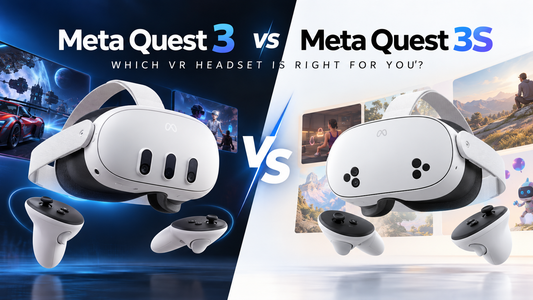
Premium headsets cost far more. Samsung's Galaxy XR launched at $1,799 in the US, and Smartprix lists it as upcoming in India. Prices change with offers and stock, so check before you buy. For a closer look at the two Quest models, see our Meta Quest 3 vs 3S comparison.
What to check before you buy
• Privacy: AI glasses have a camera. A light shows when they record, but ask people before you film them.
• Comfort: Some people feel dizzy in VR. Start with short sessions and take breaks. Meta's headsets are meant for ages 10 and up.
• Eyesight: Ray-Ban Meta frames can take prescription lenses. For a VR headset, check that your spectacles fit inside, or buy prescription lens inserts.
• Your phone: AR glasses need a phone that can send video through its USB-C port. Not every phone can, so check yours first.
• Warranty: Ask for a GST invoice and clear warranty terms, especially for imported headsets.
Where the technology is heading
The lines between the three groups are starting to blur:
• AI glasses with a screen: Meta Ray-Ban Display adds a small screen inside one lens. It costs $799 in the US and hasn't launched in India.
• AR glasses with AI: XREAL Aura brings Gemini to AR glasses.
• More AI glasses brands: Samsung showed Gemini-powered AI glasses, designed with Gentle Monster and Warby Parker, in July 2026. They're expected later this year.
• VR in a glasses shape: Meta's VR Glasses put a VR display into a frame of about 100 g, with a separate pocket unit. They're due in spring 2027 at $1,299.99.
For buyers in India today, the three groups are still clearly different. Start with the job you want done, and the right device usually becomes obvious.
Frequently Asked Questions
What is the difference between AR, VR and AI technology?
AR adds digital images to the real world, and VR replaces the real world with a virtual one. AI is different. In these devices, it's software that understands what you say or see and answers you. AI isn't a type of display, so it can run inside AR glasses, VR headsets or glasses with no screen at all.
Do AI glasses have a screen?
Most don't. Ray-Ban Meta and Oakley Meta glasses use sound and a camera, not a screen. A few newer models, such as Meta Ray-Ban Display, add a small screen inside one lens.
Can AR glasses replace a laptop monitor?
For many people, yes. AR glasses like XREAL show your laptop screen as one large virtual screen. They suit travel and small desks, but some people find a real monitor more comfortable for very long workdays.
Do I need a PC or phone to use a VR headset?
You don't need a PC. Standalone headsets like the Meta Quest 3 and 3S have their own chip and battery. You only need a phone with the Meta Horizon app to set them up. You can also connect them to a gaming PC for heavier PC VR games.
Can I wear my spectacles with a VR headset?
Yes, in most cases. Many glasses fit inside the Quest 3 and 3S, and the Quest 3S comes with a glasses spacer for extra room. Prescription lens inserts from brands like Zenni are another option.
Is the Meta Quest officially sold in India?
No. Meta doesn't officially sell Quest headsets in India. They are imported and sold by Indian retailers, so check the GST invoice and warranty terms before you buy.
Which is best for students: AI glasses, AR glasses or a VR headset?
For learning, a VR headset usually helps most. Virtual labs, 3D models and virtual field trips make hard topics easier to see. AR glasses suit students who want a big private screen, and AI glasses suit students who want hands-free photos, calls and quick answers.
Will one device replace the other two?
Not yet. AI glasses are adding screens, AR glasses are adding AI, and VR is moving into lighter frames. For now, each one still does its own main job best.
About the author Mehul Baldaniya is co-founder of Cyphon, an Ahmedabad store for VR headsets, AI glasses, AR glasses and cameras that started in 2022. This guide was last updated on 24 October 2026. Prices, stock and features change often, so check official stores for the latest details.
Tags: